Reduced airflow, recurring leaks and unusual sounds can signal that an air-conditioning system needs attention. Learn what you can safely observe and how to prepare for a productive technician visit.
Air conditioning plays an important role in the comfort of homes, offices and commercial spaces. When a system performs differently from usual, the most useful first step is to observe the symptoms and arrange appropriate assessment. Turning the temperature lower or repeatedly restarting the unit can hide the problem temporarily without addressing its cause. A planned approach helps occupants communicate clearly and keeps servicing focused on the actual issue.
Notice changes in cooling and airflow
A room that takes longer than usual to cool may have several possible causes. The issue could involve airflow, equipment condition, controls or the way the space is being used. Before requesting service, note whether the change affects one room, one outlet or the entire property. Record the settings and whether the problem occurs throughout the day or only under particular conditions.
Keep supply and return openings clear of furniture and stored items. Do not block outlets to force cooling elsewhere without professional guidance. If the system consistently struggles despite ordinary use, ask a technician to investigate rather than assuming refrigerant must be added. Refrigerant-related work requires suitable expertise and should be based on diagnosis.
Take leaks and unusual smells seriously
Water appearing near an indoor unit or ceiling outlet should be reported promptly. Possible causes vary, and a technician may need to assess the drainage arrangement and equipment. Photograph the affected area, avoid placing valuables beneath it and keep away from wet electrical equipment. If water is near electrical installations or the situation appears unsafe, stop using the affected equipment where safely possible and seek professional help.
A persistent unusual smell should also be assessed. Do not spray fragrances or strong cleaning chemicals into a unit to conceal it. A burning smell, smoke or unusual heat calls for stopping use safely and contacting the appropriate professional or emergency service depending on the circumstances. Suspected mould or contamination may need a different assessment from an ordinary cleaning visit.
Listen for new or recurring sounds
Compare the sound with the system's normal operation. A new vibration, rattling sound or repeated starting and stopping can be useful information for the technician. Note when it happens and, if safe, record a short audio or video clip. Avoid opening the unit or reaching inside to locate the source.
A noise does not identify the fault on its own. Ask for an explanation of what was found and which corrective action is recommended. Clear service notes help if the same symptom returns after a visit, particularly where more than one unit serves the property.
Follow the manual for owner-permitted care
Some systems allow users to clean or replace accessible filters, while others require trained servicing. Follow the specific manufacturer's instructions, including shutdown and access guidance. If a filter is inaccessible or the method is unclear, leave it to a technician. Do not improvise with unsuitable cleaning products or force components into position.
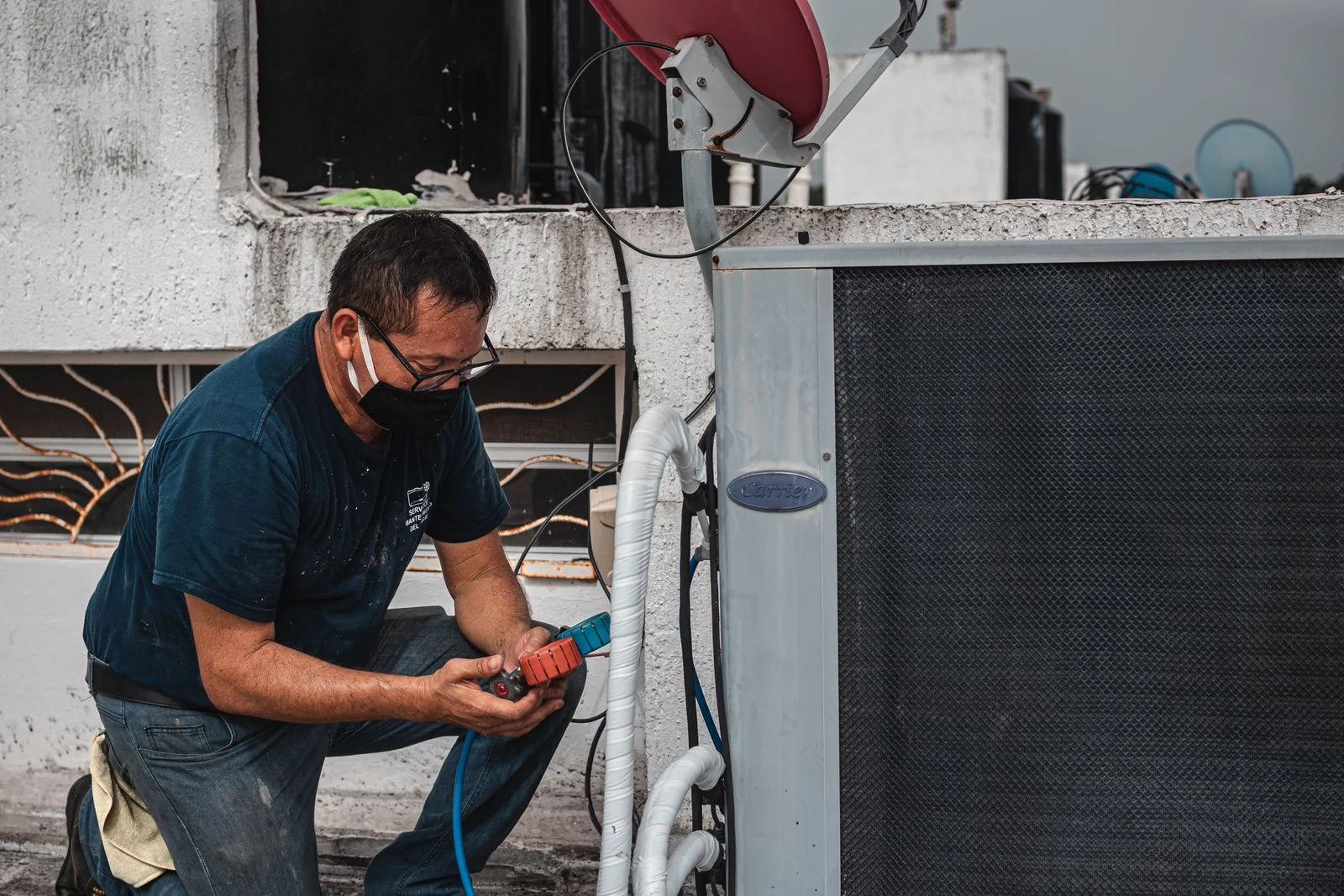
Internal cleaning, electrical testing, refrigerant work and difficult access are not casual household tasks. Outdoor units also need appropriate access and clearance, but occupants should not climb, remove guards or approach moving parts to perform an inspection. Keep maintenance responsibilities clear in rented or managed properties.
Prepare the space and the service information
Tell the provider the type and location of the system, the symptoms and any previous work. Share available manuals or service records. Explain access restrictions, whether a unit is above a ceiling or on a roof, and who can authorise entry to managed areas. Clear movable belongings from the agreed work area without attempting to dismantle anything yourself.
For workplaces, coordinate the visit with the responsible facilities person and consider how occupied areas will be affected. Agree any shutdown or isolation arrangements in advance. A productive service visit depends on safe access and clear scope as much as the technician's time on site.
Plan follow-up around the equipment and its use
There is no single servicing interval suitable for every installation. Ask the technician to recommend a schedule based on the equipment instructions, operating conditions and findings. Record completed work, identified limitations and any parts or follow-up that need approval.
After service, review normal operation and report unresolved symptoms with the service reference. Ask what was checked and whether any further diagnosis is required. If you are arranging AC maintenance with DIYA ALDAR, provide the observed problem and access information through the Contact Us page so the required work can be discussed clearly.